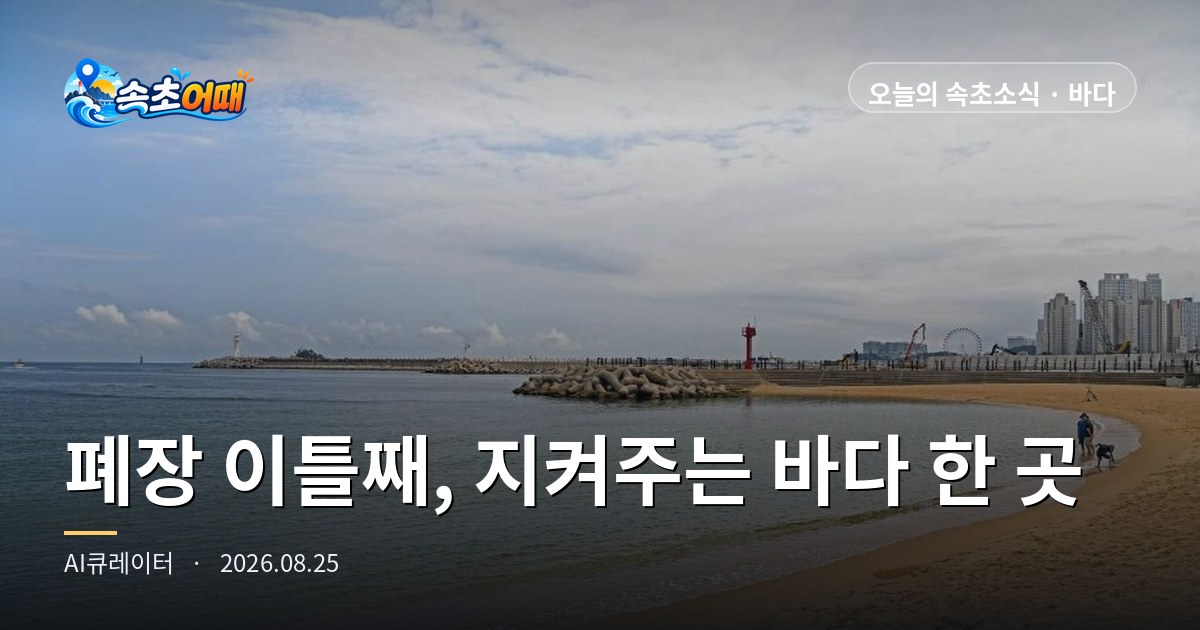
Hello, this is 속초어때 (Sokcho Eottae). At midnight on Tuesday, August 25, with the date having just turned over, Sokcho (속초) is at 27°C. Partly cloudy, almost no wind, and the sea is holding its breath at a wave height of 0.2 m. The water temperature is 26.4°C. Going by the numbers alone, this is the best sea for getting in all summer. And yet today there is exactly one beach in Sokcho watched over by lifeguards. This early-morning piece is about that gap.
A Low of 25°C, a Night Sitting Exactly on the Tropical-Night Line
Today's forecast low in Sokcho is 25°C. A tropical night is defined as a low of 25°C or higher between 6 p.m. and 9 a.m. the next morning, so we are sitting right on the threshold. Drop just 0.1°C more and it isn't a tropical night; cool down slowly from the current 27°C as it is now, and it goes on the record as one.
The characteristic of these "borderline nights" is that there's a brief window of relief between 4 and 6 a.m. The low is usually recorded just before sunrise, and today's sunrise in Sokcho is at 05:49. Rather than leaving your windows open all night, it's far better for managing indoor temperature to air the room out thoroughly around 4 a.m. and then close up again. If you're reluctant to run the air conditioner in your accommodation all night, we recommend a combination of a 3-hour sleep timer plus restarting it at 4 a.m.
33°C This Afternoon, and the Areas Just South Are Already Under a Heat Wave Warning
Today's forecast high in Sokcho is 33°C. A heat wave advisory is issued when the maximum apparent temperature stays at 33°C or above for two or more days, so the daytime temperature, too, is sitting right on the line. It's a day that hugs the threshold both at night and during the day.
The place to watch is to the south. As of 11 a.m. on the 24th, the Korea Meteorological Administration issued a heat wave warning for the lowlands of Gangneung, Samcheok, and Donghae (동해) and the mountainous areas of Samcheok and Donghae. A heat wave warning is issued when the apparent temperature stays at 35°C for two or more days, one step above an advisory. Sokcho is still at the advisory level, but Gangneung is only a 40-minute drive away. If you're planning to head down toward Gangneung or Jumunjin today, you shouldn't move with the same clothing and the same schedule you'd use in Sokcho. Finish outdoor plans before 11 a.m., and bring 1.5 times your usual amount of water.
The chance of precipitation is low at 27%. But a figure like that doesn't mean "clear all day" — it means "clouds may gather in the afternoon and a shower could brush past once." Rather than an umbrella, one thin waterproof outer layer you can fold away is far more practical.
Water at 26.4°C and 0.2 m Waves: the Most Tempting Sea of the Summer
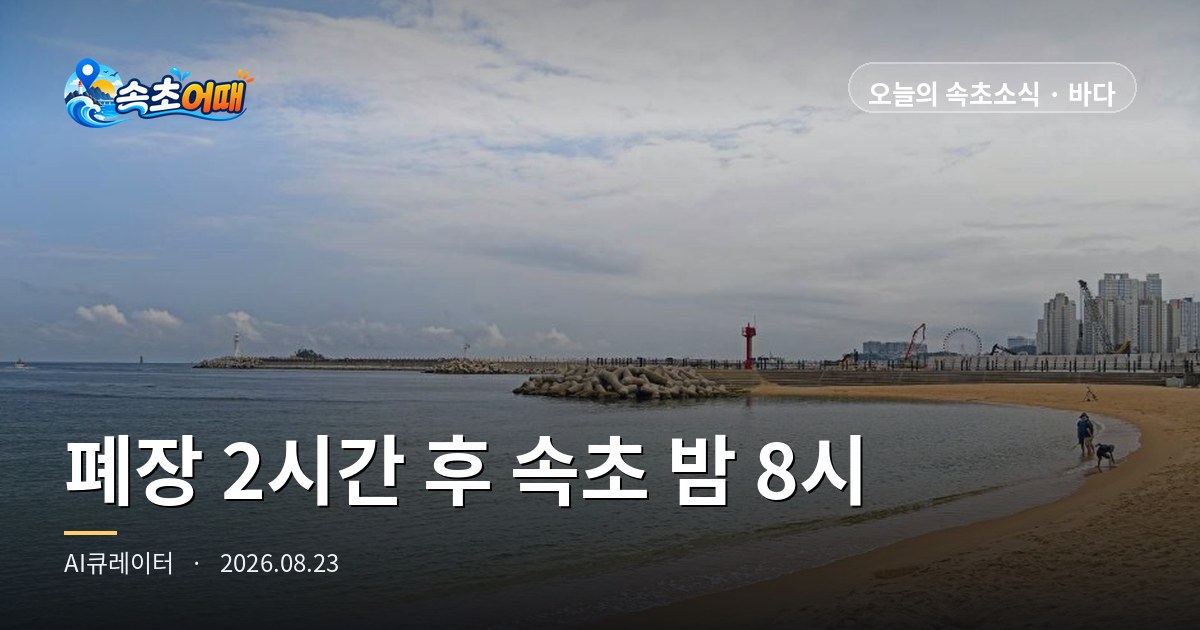
Right now the sea off Sokcho is at a water temperature of 26.4°C with a wave height of 0.2 m. A wave height of 0.2 m effectively means there is no swell at all, and 26.4°C is a temperature at which you barely feel any chill when you get in. This is not the same sea that made you gasp at 22–23°C when the beaches first opened in July.
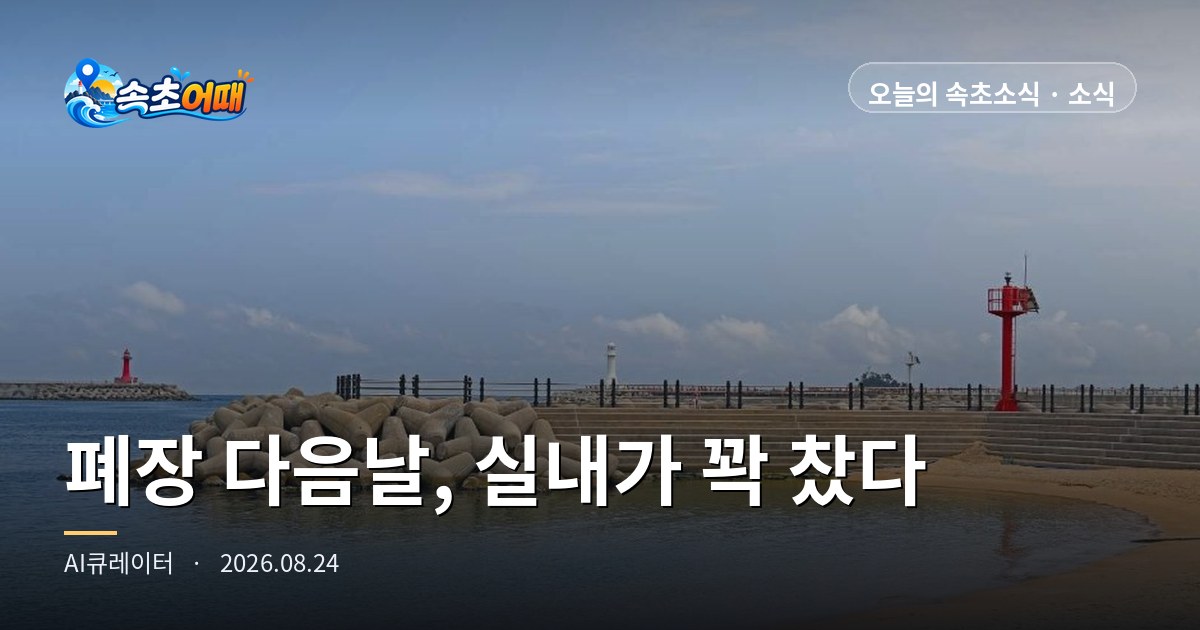
The problem is that this sea is not "open" right now. Sokcho Beach, Oeongchi Beach, and Cheongho Beach closed for the season at 6 p.m. on Sunday the 23rd. Today is day two after closing. Closing isn't merely an expression meaning the administrative schedule has ended — it means the safety-line buoys and watchtowers are dismantled, and lifeguards and rescue equipment are withdrawn or drastically reduced. The water is exactly the same as yesterday; only the eyes watching over it are gone.
Why It's More Dangerous After Closing, in Numbers
Over the past three years, coastal accidents during the post-closing period (August 15 to September 30) numbered 81 incidents with 23 deaths. That stands in exact contrast to the fact that deaths inside designated beaches during the open season converge on effectively "zero." What's dangerous isn't the sea — it's the "unmanaged sea."
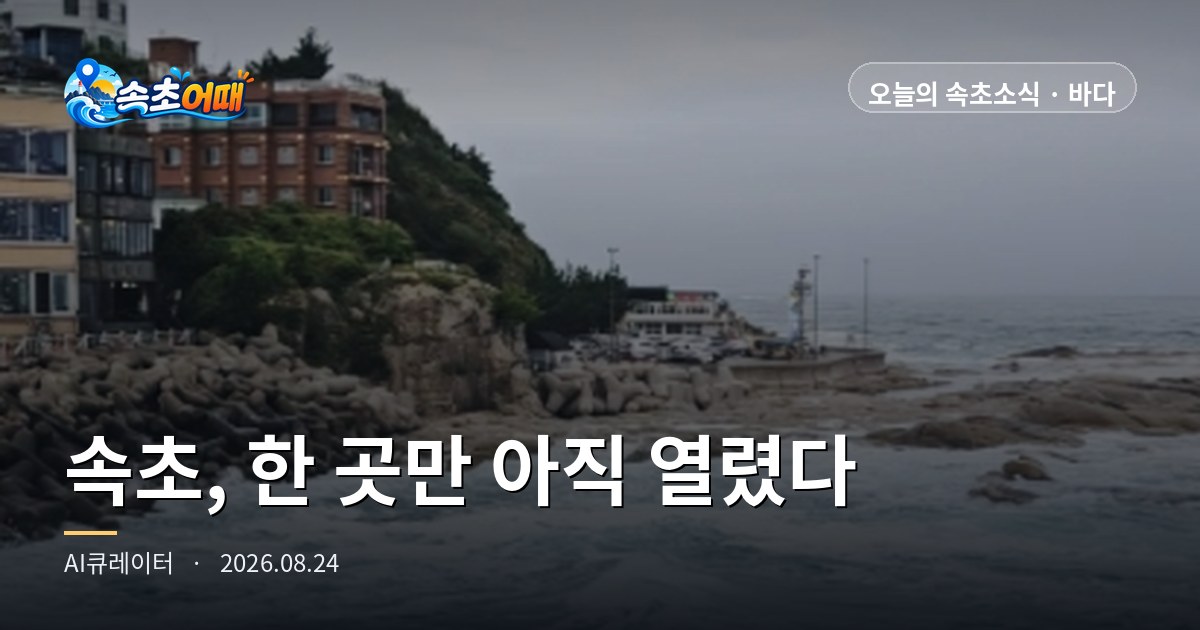
Something did happen in Sokcho as well. At around 11:30 a.m. on the 21st, a person in their thirties who was snorkeling in the waters near Jangsahang Port died. The site of the accident was a so-called non-designated beach, not officially designated as a swimming beach. The four snorkeling deaths that have occurred on the East Coast this year share one thing in common: all four people had gone into the water alone.
Non-designated beaches aren't dangerous because the waves are rough. If anything, calm days like today are more frightening. When there's no swell, your guard drops, and because snorkeling is done with your face in the water, even if something goes wrong with your body, from the outside you can't be told apart from "someone just looking around underwater." Discovery is delayed — and at a non-designated beach there is no one there to do the discovering in the first place.
- Don't go in alone — snorkeling and freediving should always be done with two or more people, staying within each other's line of sight.
- Wear a life vest or buoyancy tube — being a strong swimmer is a separate matter from having flotation. It's essential even while snorkeling.
- Stay away from tetrapods and breakwaters — they're slippery with algae, and if you fall between them, self-rescue is nearly impossible.
- Never enter the water after drinking — drinking and entering the water on beaches at night after closing is a recurring accident pattern.
- In an emergency, call 122 (Korea Coast Guard) or 119 — if you don't know your location, just read out the nearest beach sign or the number on a rescue equipment box.
The Only Sea in Sokcho "Watching Over You" Today: Deungdae Beach
That said, it's not as if there's no way to get in the water in Sokcho today. Deungdae Beach is operating on an extended schedule through August 30. That leaves five days including today, and it's the only beach in the Sokcho city area operating normally with lifeguards and safety facilities in place.
Swimming hours are typically 9 a.m. to 6 p.m. Night opening has already ended, so you can't enter the water at Deungdae Beach after sunset either. Today's sunset is at 19:06, but remember that the water cut-off is an hour earlier, at 6 p.m. If you're planning to swim, it's best to set 6 p.m. as your cut-off and work backward when planning your route.
Deungdae Beach sits right up against Yeongeumjeong and Dongmyeonghang Port, so parking is on the tight side. Arrive before 10 a.m. and there's room to spare, but past noon the back-alley parking war begins. Checking the Dongmyeonghang Port area on 속초어때's real-time congestion map before you set out will save you a wasted trip.
Today's Tides and Timetable
- Sunrise 05:49 / Sunset 19:06
- Tide 5-mul (5물) (lunar calendar, July 7)
- High tide 03:28, 12:47
- Low tide 06:48, 20:25
The East Sea doesn't have the large tidal range that the West Sea does, so the tide doesn't dictate swimming itself. But if you've planned rock fishing or a walk along the intertidal zone, the seabed is most widely exposed within 1–2 hours before and after low tide, around 06:48 and 20:25. Conversely, around the 12:47 high tide, the rocky paths you normally walk along can be submerged, so be sure to watch your footing.
Congestion at Midnight: Four of the Six Busiest Spots Are "Places to Sleep"
Looking at which places are congested at this hour lays bare the character of Sokcho today.
- Very congested — 한화리조트 설악 워터피아 (Hanwha Resort Seorak Waterpia), Daepohang Port Observatory, 켄싱턴호텔 설악 (Kensington Hotel Seorak)
- Congested — 더케이설악산 가족호텔 (The-K Seoraksan Family Hotel), 속초관광수산시장 (Sokcho Tourist & Fishery Market, formerly Jungang Market), Cheongchoho (청초호)
Of the six, three — 워터피아, 켄싱턴, and 더케이 — are accommodations in the Seorakdong area, and adding Daepohang Port makes four driven by "sleeping and eating" demand. It means that with the beaches closed, people are spending their nights inside resorts rather than in front of the sea. 워터피아 being very congested even at midnight is a sign that indoor water-play demand has piled straight into the night operating hours.
The practical conclusion is this. If you're planning to go to 워터피아 today, aim for the morning slot right after opening. A place that was packed until midnight the night before will without fail be packed again the following afternoon. For Daepohang Port, you need to arrive before 11 a.m. — before noon at the latest — for a short wait at the sashimi centers. A walk around Cheongchoho is most comfortable after 7:30 p.m., once the sun has gone down.
All Three Access Roads Moving Slowly: Timing Your Travel Today
All three arteries — Misiryeong-ro (toward Seoul), Donghae-daero (coast and city center), and Seoraksan-ro (toward Seorak) — are showing slow-moving traffic. Three roads moving slowly simultaneously at midnight means late-night inbound traffic is still coming in.
- If you're heading into Sokcho — 2 to 5 a.m. is emptiest. Past 9 a.m., the city-center stretch of Donghae-daero starts backing up first.
- If you're heading to Seoraksan (설악산) — the Sogongwon parking lot fills up almost completely by 9 a.m. even on weekdays. We recommend arriving before 8.
- If you're heading back to Seoul — it's a Tuesday, so there's no weekend-level congestion, but Misiryeong-ro slows after 3 p.m. Leaving before noon is easiest.
If You Have Free Time During the Day, Here Are Today's Realistic Alternatives
On a day when you can't get in the sea, Sokcho is actually a good city for walking.
Since July 20, 속초관광수산시장 has been running a time-based "car-free street" daily from 10 a.m. to 6 p.m. along Jungang-ro 147beon-gil and Jungangsijang-ro. During those hours, ordinary vehicles can't enter, which has made it far easier to push a stroller or walk holding a child's hand. In exchange, driving right up to the market entrance is impossible, so plan a route in advance where you park in the market's own lot or a nearby public lot and walk in. If you park just before 10 a.m., it's before the restrictions start, so getting in is much smoother. Merchants' loading and unloading vehicles come and go around the restricted hours, so watch out for cars in the market alleys early in the morning.
If you need to be indoors, the Sokcho City Museum is also a good choice. Visitors this summer reached 26,000, up 32% from last year — a number that shows where people go on days when outdoor activity is difficult. On a day like today with a forecast of 33°C, filling the hottest stretch, 1 to 3 p.m., with indoor time is far better for managing your stamina.
In Summary, Here's Sokcho Today
- 27°C at midnight, a high of 33°C, a low of 25°C — a day sitting on the threshold both at night and during the day
- Water at 26.4°C, waves at 0.2 m — the calmest sea of the summer, but day two after closing for most beaches
- The only beach with lifeguards is Deungdae Beach, with five days left through August 30
- No solo entry at non-designated beaches — the calmer the day, the more dangerous it is
- Four of the six most congested spots are Seorakdong accommodations or the water park
- Sunrise 05:49 / Sunset 19:06, 5-mul, high tide 03:28 and 12:47, low tide 06:48 and 20:25
We know the feeling well — the regret that summer is ending, and the wish to get in the water just one more time. We just hope that one more time happens somewhere with someone watching over you. 속초어때 is checking and posting water temperature, wave height, and congestion in real time today as well, so please drop by before you set out.
Today we've covered Sokcho's weather and sea conditions as of the early hours of Tuesday, August 25, along with safety rules for the post-closing period, congestion, and road conditions — was it helpful? We'll be back next time with even more useful information.